
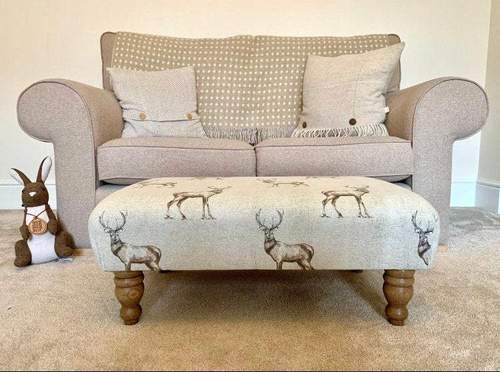
Feet up. Kettle on. But if your footstool is the wrong height, that lovely moment can leave you fidgeting rather than relaxing. The right height supports your posture, eases pressure, and turns your sofa into a true lounging spot.
This guide walks you through simple measuring steps, when a footstool should sit lower or level with your seat, and how foam and frame quality affect comfort. You will also find a short checklist you can print, plus room-by-room tips for the living room, bedroom, and conservatory.
And if you are looking for something made-to-measure, Crafted Home Decor offers handmade small and large footstools, custom sizing, and fast UK delivery within 7 working days, with free returns and a price match promise.
The 90-90-90 sitting guideline, in plain English
The 90-90-90 guideline is an easy posture cue for seated comfort:
-
Hips and knees at roughly 90 degrees.
-
Ankles at roughly 90 degrees, with feet supported.
In practice, this means your thighs should be level, knees bent naturally, and feet supported so your ankles are not dangling or over-extended. You do not need to measure with a protractor. Aim for right-angle comfort that feels neutral and relaxed. A correctly sized footstool helps keep your lower legs supported so your ankles can rest without your toes pointing down or up too much.
Should a footstool be higher or lower than the sofa seat?
Start with the height of your sofa or armchair seat. For most people, the most comfortable footstool height is slightly lower than, or roughly level with, the seat height:
-
Lower works best for relaxed lounging, especially if you sometimes stretch your legs straight. A stool that is 2 to 5 cm lower than your seat often feels easy and unforced.
-
Level works well for upright sitting with gentle support under your feet. It helps you maintain that 90-90-90 posture during reading or TV time.
Avoid going noticeably higher than the seat height. If your feet are lifted too much, your knees sit above your hips, which can feel bunched and can tilt your pelvis in a way that is not comfortable for long periods. As a rule of thumb, do not exceed seat height.
Is it healthy to use a footstool?
A footstool can be a simple way to improve comfort. It can help reduce pressure under the thighs, give your ankles a neutral rest position, and encourage a gentler lower-back posture. Comfort is personal, so listen to your body. If you have specific health concerns, speak with a qualified professional. For everyday use, the right height and cushion firmness typically make relaxing easier.
Are footstools bad for your back?
Not inherently. A poorly sized or overly soft footstool can leave you slumping or reaching, which is not ideal. Choose a height that aligns with the 90-90-90 guideline and foam that does not collapse. Mix up your sitting positions through the evening, and sit upright when you want firmer support. Used thoughtfully, a footstool is more friend than foe.
Quick measuring steps
You can size a footstool in five minutes:
-
Measure seat height. From floor to the top of your sofa or armchair seat cushion at the spot where you sit most.
-
Pick your posture. Decide if you want upright support (aim for level with the seat) or laid-back lounging (aim 2 to 5 cm lower).
-
Check ankle angle. Sit, place a stack of magazines or a firm cushion where a stool would be, and adjust until your ankles feel neutral.
-
Note the height. Measure the stack height that felt best, then compare to available footstool sizes.
-
Consider length and width. For one person, a small footprint is fine. For sharing, choose a wider style or a large footstool so both pairs of feet fit comfortably.
Why foam density and frame quality matter
Comfort is not just height. It is how the top feels and how the frame behaves over time.
-
Medium-density foam: Soft enough to cushion your heels and calves, firm enough to keep your ankles supported without sinking. It helps maintain a stable angle so your posture does not drift while you relax.
-
Solid, screwed frames: A sturdy base prevents rocking and keeps the surface level. This consistency makes a big difference during longer film nights or reading sessions.
Crafted Home Decor uses medium density foam and strong, solid wooden frames with beech legs, professionally upholstered in Derbyshire. The result is supportive comfort that holds its shape.
Room-by-room suggestions
Living room
-
Go slightly lower than seat height for movie lounging.
-
If you often host, consider a large surface that doubles as extra seating or as a soft coffee table with a tray. Explore styles in the main footstool collection to find a shape that suits your space and fabric scheme. You can start with the footstool for living room range at https://www.craftedhomedecor.co.uk/collections/footstools.
Bedroom
-
A small ottoman at the end of a chair is ideal for quiet reading. Keep it near level with the seat for easy on-off. For compact spaces, browse small footstools at https://www.craftedhomedecor.co.uk/collections/small-footstools.
Conservatory
-
Light, airy fabrics and a wipe-friendly weave work well. If you share the space, a larger top gives two people comfortable support. See large footstools options at https://www.craftedhomedecor.co.uk/collections/large-footstools.
Printable-style checklist
Tick these off before you buy:
-
Measure your seat height, floor to top of cushion.
-
Decide your posture aim, level for upright or 2 to 5 cm lower for lounging.
-
Test with magazines or a firm cushion to find your sweet spot.
-
Choose medium-density foam for support that will not sag.
-
Pick a solid, screwed frame with hardwood legs for long-term stability.
-
Size the top for one or two pairs of feet as needed.
-
Match fabric to your room, light for airy spaces, richer tones for cosy corners.
-
Plan placement, allow foot clearance and easy walk-through.
Spotlight on Crafted Home Decor footstools
Handmade in Derbyshire with solid frames and medium-density foam, Crafted Home Decor footstools are built for daily comfort. Choose from small, mini, and large sizes, plus upholstered designs in classic wools and characterful prints. Prefer a statement piece or a quirky footstool for a reading nook? You can explore styles, fabrics, and shapes in the main collection at https://www.craftedhomedecor.co.uk/collections/footstools.
Need a precise height to match your sofa? Ask about custom sizing or supply your own fabric for a perfect match. You get free UK delivery, fast dispatch on footstools within 7 working days, free and hassle free returns, and a price match promise.
Short FAQs
What is the 90-90-90 rule for sitting?
It is a simple posture cue, hips, knees, and ankles at roughly 90 degrees. A correctly sized footstool helps your ankles rest in that neutral position.
Is it healthy to use a footstool?
For everyday comfort, yes, when sized well. It can ease pressure and help your ankles sit neutral. If you have health concerns, check with a professional.
Are footstools bad for your back?
Not if you choose the right height and supportive foam. Avoid stools that are much higher than your seat or that collapse.
Should a footstool be higher or lower than the sofa?
Aim for level with the seat for upright sitting, or a little lower for lounging. Avoid going higher than the seat.
What is the most comfortable height for a footstool?
It varies by user and chair, but a good starting point is level with your seat or 2 to 5 cm lower. Test at home with a magazine stack to confirm.
Final thoughts
Pick height first, then firmness and frame. Aim for level or slightly lower than the seat, medium-density foam, and a solid, well-built base. Test quickly at home, then choose the size that fits your room and routine. If you want a made-to-measure fit with quality materials and quick UK delivery, explore Crafted Home Decor footstools and ask about custom sizing. Free UK delivery, free returns, and a price match make it easy to try your perfect perch.